The world wouldn’t need saving if people would do one simple thing.
Pay attention.
Not the shallow kind. Not the skim, scroll, multitask version we pretend counts. Real attention. The kind that costs you something. The kind that slows you down enough to notice what’s actually happening instead of what you’ve already decided is happening.
Most damage in the world isn’t caused by malice. It’s caused by inattention. People don’t ruin relationships because they’re evil; they ruin them because they stop noticing. They don’t become cruel overnight; they become distracted, tired, automatic. They stop seeing the human in front of them and start reacting to a category, a memory, a mood, a story they’re telling themselves.
Attention is the difference between response and reflex.
A person who is paying attention notices the moment their voice sharpens. They feel the tightening in their chest before the words leave their mouth. They catch the lie while it’s still forming and have a split second to decide whether they’re going to say it anyway. That pause is everything. That pause is where character lives.
Now scale that up.
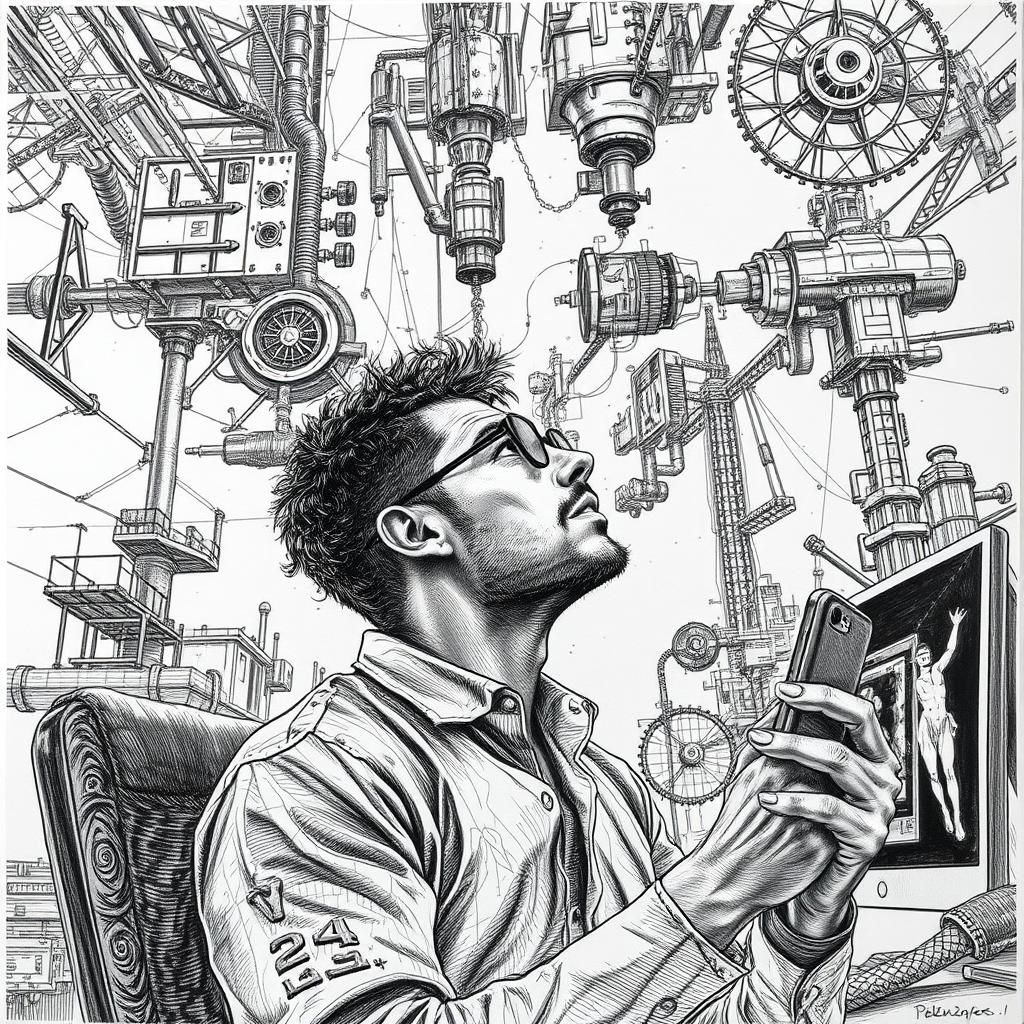
Imagine institutions that paid attention. A justice system that noticed patterns instead of statistics. An economy that noticed second-order effects instead of quarterly numbers. A medical system that noticed the person before the protocol. Most systems don’t fail because the people inside them are stupid. They fail because no one is allowed to stop and actually look. Speed replaces sight. Metrics replace judgment.
Paying attention is dangerous to bad systems.
This is why distraction is profitable. A distracted population is easy to sell to, easy to herd, easy to exhaust. When people aren’t paying attention, you don’t need to convince them of lies. You just need to keep them busy enough not to notice contradictions. Noise becomes camouflage.
Look at how much of modern life is designed to fracture attention on purpose. Infinite feeds. Alerts engineered to trigger urgency. Outrage packaged as entertainment. None of this exists because it makes people wiser or calmer. It exists because attention, once captured, can be rented out to the highest bidder.
And here’s the part people don’t like to admit: we participate willingly. We trade attention for comfort, stimulation, numbness. We let ourselves be scattered because being fully present means feeling things we’d rather avoid—grief, responsibility, doubt, guilt. Attention brings clarity, and clarity demands action. Distraction lets you postpone becoming the person you know you should be.
Paying attention would change how we treat each other first.
You’d notice when someone is speaking from fear instead of malice. You’d hear what’s underneath the anger instead of reacting to the volume. You’d recognize when a disagreement is about facts and when it’s about identity, and you’d stop trying to win arguments that were never about truth in the first place.
You’d also notice when someone is manipulating you. Attention is the natural predator of bullshit. Gaslighting doesn’t work on people who remember what was said. Propaganda fails when patterns are tracked instead of headlines consumed in isolation.
Paying attention would also change how we treat ourselves, which might be the bigger revolution.
Most people don’t know why they’re unhappy because they never sit still long enough to observe the cause. They anesthetize every quiet moment. They chase motivation instead of noticing fatigue. They call themselves lazy when they’re actually burned out, misaligned, or living a life built around other people’s expectations.
Attention turns vague suffering into specific problems. Specific problems can be solved.
This is why monks, craftsmen, scientists, and artists all converge on the same discipline from different directions. Attention refines perception. Refined perception sharpens judgment. Sharp judgment leads to better decisions. Better decisions compound.
A world that paid attention would be slower in the ways that matter and faster where it counts. Fewer knee-jerk reactions. Fewer moral panics. Fewer policies written in response to headlines instead of realities. Progress would look less dramatic and more durable.
This wouldn’t make the world utopian. Pain wouldn’t disappear. Conflict wouldn’t vanish. But stupidity would lose its camouflage. Injustice would have a harder time hiding behind bureaucracy. Abuse would be noticed earlier. Lies would have shorter lifespans.
And individuals would become harder to control.
That’s the quiet threat of attention. A person who sees clearly is difficult to manipulate, difficult to rush, difficult to scare into compliance. They don’t outsource their thinking. They don’t need constant reassurance. They don’t confuse consensus with truth.
Paying attention is not passive. It’s an act of discipline. It’s a refusal to sleepwalk through your own life.
If the world feels insane, it’s not because reality has become incomprehensible. It’s because too few people are actually looking at it.
Pay attention—to your words, your habits, your reactions, your environment, the incentives shaping the systems you live inside. Do that consistently, and you don’t need grand revolutions or charismatic leaders. Clarity spreads. Behavior changes. Standards rise.
The world improves not when people become nicer, louder, or more opinionated—but when they become more awake.
Everything else follows.