I keep coming back to the same fucking problem.
What are we?
Not what do we believe. Not what do we call ourselves. Not what happened to us.
What are we?
Because the more I pull at that question, the less I think a human being is a thing.
I think we’re a process.
We’re a trajectory.
We’re something moving through time, getting hit by reality, interpreting what happened, making choices about it, and then slowly becoming the kind of person who makes those choices automatically.
Attention becomes perception.
Perception becomes thought.
Thought becomes choice.
Choice becomes action.
Action becomes habit.
Habit becomes trait.
Trait becomes identity.
And then identity turns around and starts controlling the whole fucking machine.
That’s the part people miss.
We build the thing that eventually starts building us.
I call that geometry.
Not geometry in the mathematical sense. Not angles and lines and equations.
I’m talking about the shape a person becomes.
Every experience puts something into the structure.
Every decision reinforces something.
Every time you lie to yourself, something changes.
Every time you tell yourself the truth when it would be easier not to, something changes.
Every person you love changes the geometry.
Every person you lose changes it.
Every failure.
Every addiction.
Every victory.
Every humiliation.
Every lesson you actually learned instead of merely surviving.
All of it gets incorporated.
You become a shape.
And for a while, that’s useful.
You need a shape.
You need some consistency.
You need to know who the hell you are when you wake up in the morning.
You need patterns.
You need habits.
You need some things you don’t have to think about.
That’s how a system becomes efficient.
That’s how a person survives.
But here’s the problem.
The same structure that allows you to survive can eventually prevent you from changing.
And that’s where I think senescence becomes much more interesting than simply getting old.
Because I don’t think senescence is only a biological problem.
I think there’s a philosophical senescence.
A person can be twenty years old and already be senescent.
They can be eighty and still be changing.
Age isn’t the important variable.
Plasticity is.
Can reality still change you?
That’s the question.
Can you encounter something that contradicts what you believe and actually modify the structure?
Or do you immediately start looking for a way to explain the contradiction without changing yourself?
That’s senescence.
Not getting old.
Getting rigid.
You stop allowing experience to modify the geometry.
The model becomes more important than the world.
And once that happens, something strange occurs.
You don’t stop learning.
You just start learning things that agree with you.
You don’t stop thinking.
You start thinking inside the boundaries of what you’ve already decided is true.
You don’t stop seeing.
You start seeing whatever your existing geometry allows you to see.
And now your identity has become an attractor.
That’s where mathematics starts getting interesting.
In dynamical systems, an attractor is a state or pattern that a system tends to return to.
That’s us.
We keep returning to ourselves.
Not because we’re necessarily supposed to, but because that’s where the structure pulls us.
You can change your behavior for a while.
You can swear you’re different.
You can make a fucking list.
You can make a resolution.
You can reinvent yourself for three weeks.
And then something happens.
Pressure.
Fear.
Loss.
Temptation.
And suddenly you’re right back there.
Same response.
Same thought.
Same decision.
Same result.
Why?
Because you changed the point.
You didn’t change the geometry.
You didn’t change the attractor.
You moved the fucking piece on the board and left the board exactly the same.
That’s why real transformation is so hard.
You aren’t just trying to behave differently.
You’re trying to become a system that naturally produces different behavior.
That’s a different problem.
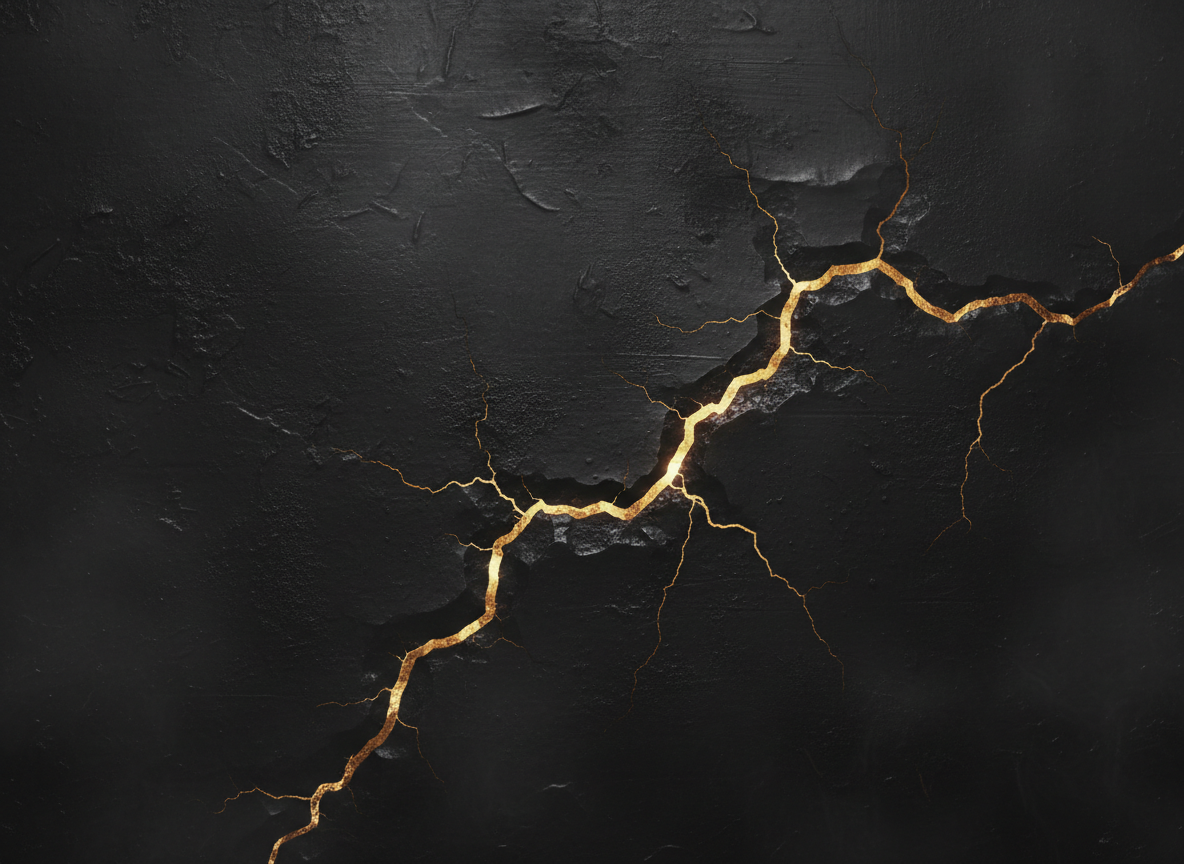
And eventually, if your geometry becomes rigid enough, reality is going to find the crack.
It always does.
Because reality doesn’t give a shit about the shape you’ve decided you are.
Reality keeps moving.
That’s the Current.
I don’t mean time.
Not exactly.
I mean change.
Everything is moving.
Everything is interacting.
Everything is becoming something else.
You don’t stop the Current.
You don’t get to negotiate with it.
You don’t get to say, “This version of me is good enough. Leave me alone.”
The Current doesn’t care.
And that creates the central tension of being alive.
You have to maintain enough structure to remain yourself.
But you have to remain flexible enough to become someone else.
Too much instability and you dissolve.
Too much stability and you fossilize.
That’s the fucking knife edge.
And I think that’s where senescence belongs.
Senescence is what happens when the structure starts defending itself against the Current.
That’s the definition I keep coming back to.
The Current is change.
Geometry is structure.
Senescence is when structure becomes hostile to change.
And then there’s anomie.
Anomie is usually talked about as normlessness. The breakdown of social rules. The loss of the structures that tell people what they’re supposed to do.
But I think there’s a deeper version.
Anomie is what happens when the rules that used to organize your reality stop working.
The map doesn’t work anymore.
And that’s a completely different kind of suffering.
Because you can survive almost anything if you know what you’re supposed to do next.
You can walk through hell if there’s a road.
But take the road away?
Now you’re lost.
That’s anomie.
Your old identity doesn’t work anymore.
Your old beliefs don’t work anymore.
Your old relationships don’t work anymore.
The things you used to want don’t make sense anymore.
But you haven’t built anything new yet.
So you’re standing in the gap.
And that gap is fucking terrifying.
Because humans hate unstructured space.
We want an answer.
We’ll take a bad answer.
We’ll take somebody else’s answer.
We’ll take an ideology.
We’ll take an addiction.
We’ll take a relationship that is destroying us.
We’ll take almost anything that gives the chaos a shape.
That’s one of the most dangerous things about anomie.
When the old geometry collapses, you become hungry for geometry.
And if you aren’t careful, you’ll let someone else build it for you.
That’s why I don’t think the Nothing is actually nothing.
I think the Nothing is what it feels like when the geometry you’ve been using to navigate reality stops working.
You enter a place where your old coordinates don’t mean anything.
You don’t know where you are because the system you used to determine where you were has collapsed.
That’s terrifying.
But it is also where transformation becomes possible.
Because sometimes the old structure has to fail before a new one can exist.
Physics gives us a language for this.
Phase transitions.
Critical points.
A system can absorb change for a long time without appearing to fundamentally change.
Then you cross a threshold.
And suddenly the organization is different.
That’s what some human transformations feel like.
People see the moment.
They don’t see the years.
They see the divorce.
They don’t see the ten thousand little fractures before it.
They see the breakdown.
They don’t see the accumulation.
They see the person finally walk away.
They don’t see the thousand times that person stayed.
They see the new person.
They don’t see the old geometry dying.
That’s why transformation can look sudden from the outside.
It usually isn’t.
The visible event is just the phase transition.
The pressure was accumulating long before anybody could see it.
But there is something else I’ve been thinking about.
Something stranger.
The Third Man.
There are people who, under extreme conditions, report experiencing a presence with them.
A companion.
A figure.
Someone walking beside them.
Someone who seems to appear when they’re exhausted, isolated, terrified, or at the absolute edge of what they can endure.
There are scientific explanations for this.
Of course there are.
The brain is capable of some fucking strange things under extreme conditions.
Hypoxia.
Sleep deprivation.
Sensory deprivation.
Stress.
Isolation.
Altered perception.
I don’t need to pretend we have an answer for something just because I want the mystery to remain.
But I also don’t want to make the opposite mistake and dismiss the experience because we can describe some of the mechanisms involved.
Because here’s the question I actually care about.
Why does the presence appear?
What function does it perform?
Because the interesting thing about the Third Man isn’t simply that somebody sees somebody who isn’t there.
It’s that the presence often seems to show up when the ordinary self isn’t enough anymore.
And that makes me wonder.
Maybe the self isn’t one thing.
Maybe “I” is just the part of the system that happens to be speaking right now.
Maybe underneath the conscious self are dozens of processes constantly predicting, remembering, protecting, evaluating, calculating.
Most of the time, we experience all of that as one person.
Me.
I.
But what happens when the system gets pushed beyond its normal operating conditions?
Maybe something that was always there becomes visible.
Maybe the brain externalizes some part of itself so that it can interact with it.
Maybe that’s all it is.
Maybe it isn’t.
I don’t know.
And I’m perfectly comfortable saying I don’t know.
But philosophically, it’s fucking interesting.
Because maybe sometimes the person who appears to save you isn’t someone who came from outside.
Maybe it’s a capacity inside you that your ordinary identity had never learned to recognize.
You thought someone came to save you.
Maybe what actually happened was that you became someone capable of saving yourself.
That’s not a supernatural claim.
It’s a transformation claim.
And that distinction matters.
Because the goal isn’t to depend on the Third Man.
The goal is to come back from the encounter with a different geometry.
And that brings me to anemoia.
Anemoia is nostalgia for a time you never lived.
I love that concept because it exposes something weird about consciousness.
We don’t only carry memories of things that happened.
We carry emotional relationships with things that never happened to us.
You can look at a photograph from 1947 and feel homesick.
You weren’t there.
You didn’t lose anything there.
You don’t actually remember it.
But something in you recognizes the shape.
That’s strange.
And I think it tells us something important.
We aren’t built only from our memories.
We’re built from possibilities.
The lives we could have lived.
The people we could have become.
The worlds we imagine.
The futures we fear.
The futures we want.
The histories we romanticize.
All of them become part of the geometry.
Memory says:
I was there.
Anemoia says:
I could have been.
And that second statement may be just as powerful as the first.
Because human beings don’t only move through actual trajectories.
We carry imagined trajectories with us.
You make one decision.
That becomes your life.
But somewhere in your head is the ghost of the other decision.
The road you didn’t take.
The person you didn’t become.
The place you didn’t go.
The life that never happened.
It’s not real in the same way your actual life is real.
But it can still shape you.
That’s fucking important.
Because it means the geometry of a human being is constructed from both experience and imagination.
And that might be one of the reasons mythology matters so much.
A myth can become an inherited memory.
A fictional person can become an internal ancestor.
A story can give you a shape before you have the experience necessary to build that shape yourself.
You can become courageous because you imagined courage before you ever needed it.
You can recognize a version of yourself before you’ve become it.
You can miss a world you never lived in.
You can become homesick for a future.
That’s not nonsense.
That’s consciousness doing something incredibly strange.
It’s modeling possibilities.
And then allowing those possibilities to affect the actual trajectory.
This is where I think information theory starts to fit.
We are constantly taking in information.
Experience comes in.
The mind compresses it.
Patterns emerge.
Models form.
Predictions get made.
Then we act based on those predictions.
The action produces another experience.
That experience modifies the model.
Then the cycle repeats.
That’s basically the entire fucking game.
Except the model can become rigid.
And then you’re in trouble.
Because a model is supposed to represent reality.
It’s not supposed to replace it.
A useful model has to be stable enough to make predictions and flexible enough to update when the predictions fail.
That’s what learning is.
Reality says:
“No.”
And you say:
“Okay. Then the model was wrong.”
That’s a healthy system.
A senescent system says:
“No. Reality must be wrong.”
That’s the difference.
And now all these apparently unrelated ideas start converging.
Senescence.
Anomie.
Anemoia.
The Third Man.
The Current.
Geometry.
Attractors.
Phase transitions.
Information.
Identity.
They’re all talking about the same basic problem from different directions.
How does a system remain itself while becoming something else?
That’s the fucking question.
Because that’s what we are.
We’re systems trying to maintain continuity while constantly undergoing change.
We want to remain ourselves.
But we also want to grow.
We want stability.
But we want freedom.
We want certainty.
But we want discovery.
We want to know who we are.
But we also want the possibility of becoming someone we haven’t met yet.
Those desires conflict.
And maybe they are supposed to.
Maybe existence isn’t about resolving the contradiction.
Maybe existence is about learning to operate inside it.
That’s what I mean when I talk about becoming the architect.
An architect doesn’t just build.
An architect understands forces.
Load.
Stress.
Failure.
Material.
Structure.
Weak points.
Redundancy.
Change.
A good structure isn’t one that never moves.
It’s one that knows how to move without collapsing.
I think a human being is the same way.
Strength isn’t rigidity.
Strength is controlled adaptability.
The ability to change shape without losing everything.
The ability to say:
“I was wrong.”
The ability to say:
“That belief saved me once, but it doesn’t serve me anymore.”
The ability to say:
“I don’t know.”
The ability to enter the Nothing without immediately filling it with somebody else’s answer.
That’s fucking difficult.
Because sometimes the most important thing you can do is remain in the gap long enough for your own geometry to reorganize.
Don’t rush back to the old self.
Don’t grab the first identity that makes the pain stop.
Don’t mistake relief for transformation.
Sometimes you’re supposed to be lost for a while.
Because the old map had to die.
And eventually, if you do the work, something starts to form.
Not an answer.
A structure.
A better structure.
A geometry capable of carrying what you’ve learned.
That’s what I think growth actually is.
Not becoming positive.
Not becoming perfect.
Not becoming some polished version of yourself that never gets angry, never fails, never falls apart.
Fuck that.
Growth is becoming more capable of reality.
That’s the test.
Can you see more?
Can you tolerate more?
Can you change faster when change is necessary?
Can you hold contradictory information without immediately needing to destroy one side?
Can you survive uncertainty?
Can you learn from pain without worshipping it?
Can you use your past without becoming imprisoned by it?
Can you build an identity strong enough to stand but flexible enough to bend?
That’s the geometry I’m interested in.
Because eventually we’re all going back into the Current.
I’m not arrogant enough to tell you exactly what happens after that.
I don’t know whether consciousness survives.
I don’t know whether individuality persists.
I don’t know whether there is anything waiting on the other side.
Maybe there is.
Maybe there isn’t.
But I don’t think we need to know that to understand the part we’re responsible for.
We’re here.
We’re moving.
We’re being shaped.
And, for some strange reason, we’re conscious enough to participate in the process.
That’s the gift.
Not that we get to stay.
We don’t.
Not that we get to preserve ourselves.
We can’t.
The gift is that while we’re here, we can participate in the construction of the shape.
We can choose what gets incorporated.
We can question what we’ve inherited.
We can destroy what no longer works.
We can build something better.
And then we can let the Current test it.
That’s the point.
Not to build a geometry that never changes.
To build one that can change without becoming meaningless.
Because eventually every shape breaks.
Every identity ends.
Every body fails.
Every structure returns to something larger than itself.
The Current takes everything.
So I don’t think the goal is to escape it.
I think the goal is to become capable of moving through it.
To build a shape worth having.
To let reality break it when it needs breaking.
To rebuild it.
Again.
And again.
And again.
Until the person you are is no longer something you defend.
It is something you continue to construct.
That, to me, is becoming the architect.
Not controlling the Current.
Not controlling reality.
Not controlling other people.
Not even controlling everything that happens inside your own head.
It’s recognizing the one place where you actually have power:
The shape you build in response.
Reality gives you the material.
The Current gives you the movement.
Experience gives you the information.
Other people give you friction.
Failure gives you stress.
Imagination gives you possible geometries.
And consciousness gives you the ability to look at the whole fucking thing and say:
What shape am I becoming?
Then you build from there.